Booking choice: The 15-day Kailash tour from Lhasa, 15 days. Book this Tour details
Four religions hold this place sacred. For Hindus, Kailash is Shiva's home and the lake was formed in Brahma's mind. For Buddhists, the lake is Anavatapta and the mountain is Mount Meru, the centre of the world. Jains say Rishabhanatha, the first Tirthankara, attained liberation here. Followers of Bon trace their faith to the kingdom of Zhang Zhung, and walk the kora anticlockwise (Wikipedia).
None of that needs proving, and this guide does not try. What it sorts out are the factual claims: heights, depths, rivers, planes, NASA, and what you can and cannot do at the lake.
The quick answer
Manasarovar is a freshwater lake at about 4,590 m, roughly 410 km² and 70 to 90+ m deep, beside the saline Rakshastal. It is one of the highest large freshwater lakes, not certainly the highest. Kailash is 6,638 m, more than 2,200 m lower than Everest, and has never been climbed because climbing is forbidden. No NASA study of Kailash exists. There is no published no-fly zone over it. Bathing in the lake has been banned since 2018, and lake water should be filtered or boiled before drinking.
What is the mystery of Lake Manasarovar?
The factual one: two lakes sit side by side, joined by a short channel, and one is fresh while the other is salty. Everything else people call a mystery is belief.
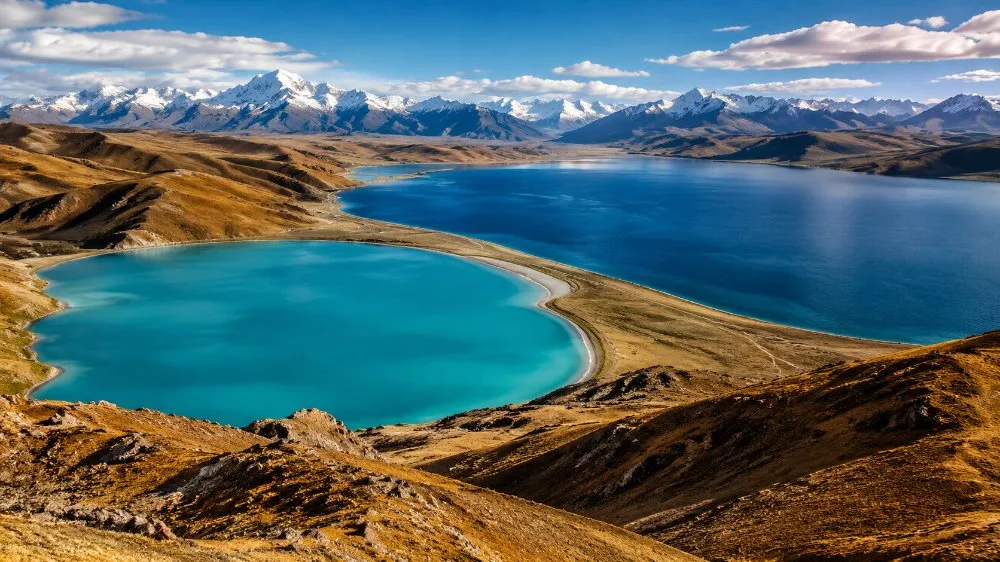
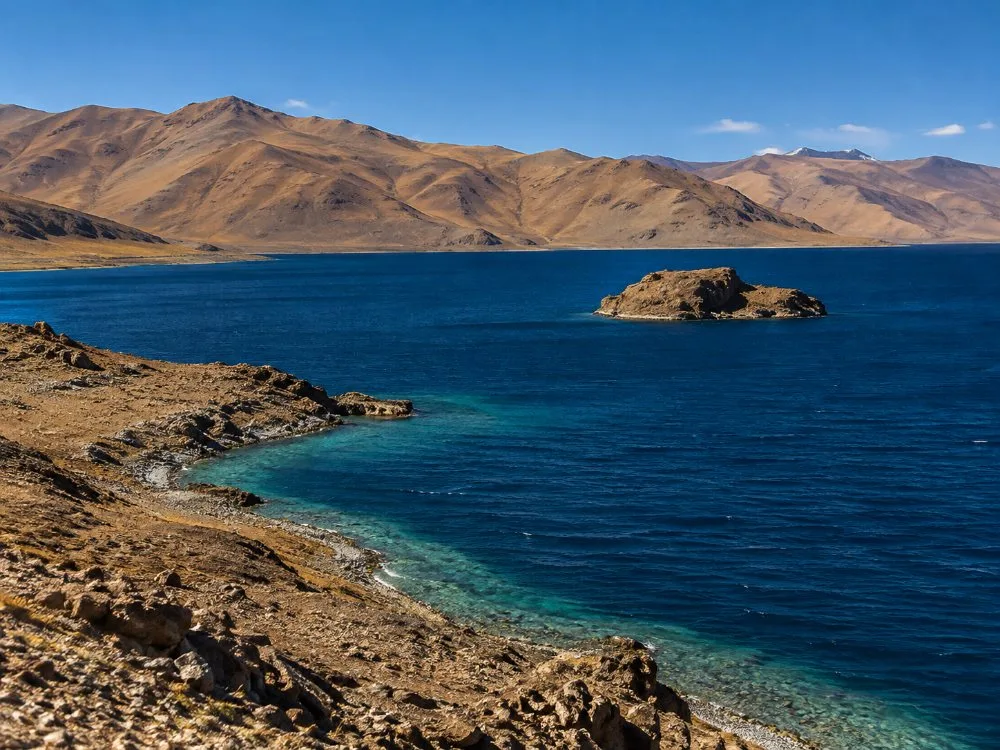
Manasarovar overflows into Rakshastal through a natural channel, the Ganga Chhu (Wikipedia). Rakshastal, at about 4,575 m and about 250 km², has no outlet and turns saline. Buddhists describe the pair as light and darkness. Hindu tradition says Ravana performed penance at Rakshastal, and many pilgrims avoid touching its water.
People often point out that Manasarovar is round and Rakshastal crescent-shaped, and read sun and moon into it. That is a reading, not a measurement, and a lovely one when you stand on the hill between them.
How high and deep is Lake Manasarovar?
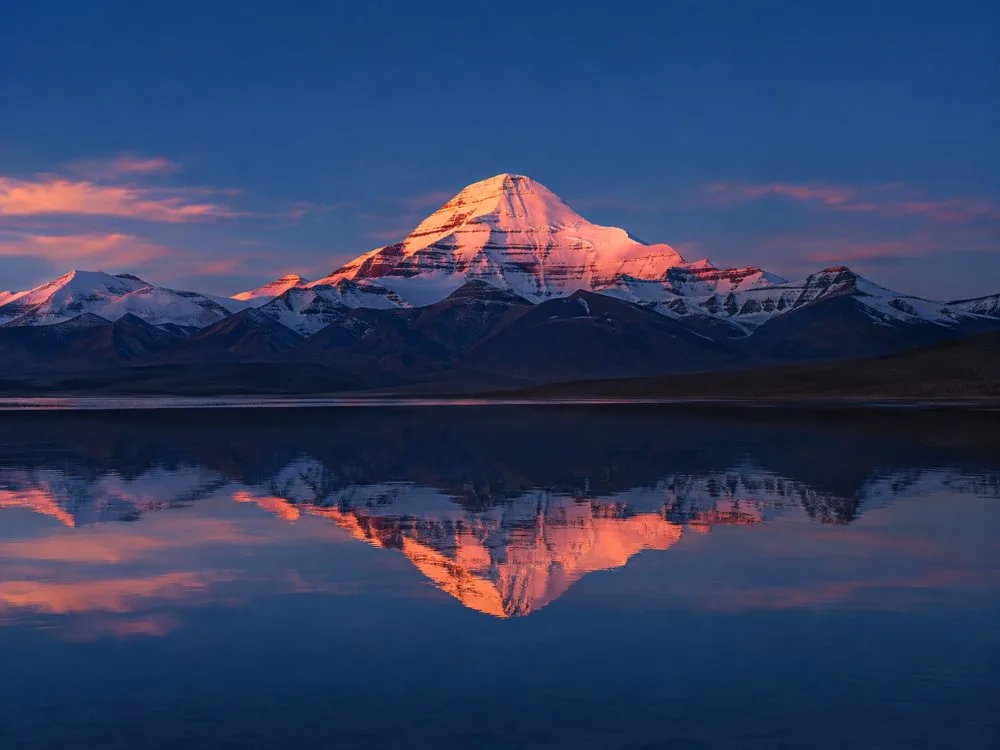
About 4,590 m above sea level, about 410 km² and 70 to 90+ m deep. Published figures differ, so rounded numbers are the honest ones.
Published heights run from 4,583 to 4,600 m. China Radio International gives 4,588 m and 412 km²; Britannica gives 4,600 m. Wikipedia's 320 km² is an outlier. The circumference is about 80 to 90 km, which is why the walking kora of the lake takes four or five days.
Is it the highest freshwater lake in the world? Britannica says it is "generally considered" so. Smaller freshwater lakes sit higher, so the fair claim is one of the highest large freshwater lakes.
| Claim | Verdict |
|---|---|
| Highest lake in the world | Overstated. One of the highest large freshwater lakes |
| Four great rivers flow out of it | No. The Indus, Sutlej, Brahmaputra and Karnali rise nearby; the lake drains only to Rakshastal |
| Kailash is taller than Everest | No. 6,638 m against 8,848.86 m |
| Nobody has climbed Kailash | True. Climbing is forbidden |
| NASA studied Kailash | No evidence. No credible source |
| Planes cannot fly over it | Myth. No published no-fly zone; little air traffic |
| You can bathe in the lake | Not since 2018. Collecting water is allowed |
Do four rivers really flow from Kailash and Manasarovar?
They rise near it, not from it. The Indus, Sutlej, Brahmaputra (Yarlung Tsangpo) and Karnali all have sources within about 60 km of the area.
That is the geography behind an old belief that the great rivers of South Asia pour out of the sacred lake. The Sutlej is traditionally said to rise about 17 km west of Rakshastal (Wikipedia). Manasarovar itself only drains to Rakshastal, and in dry years even that link can stop flowing.
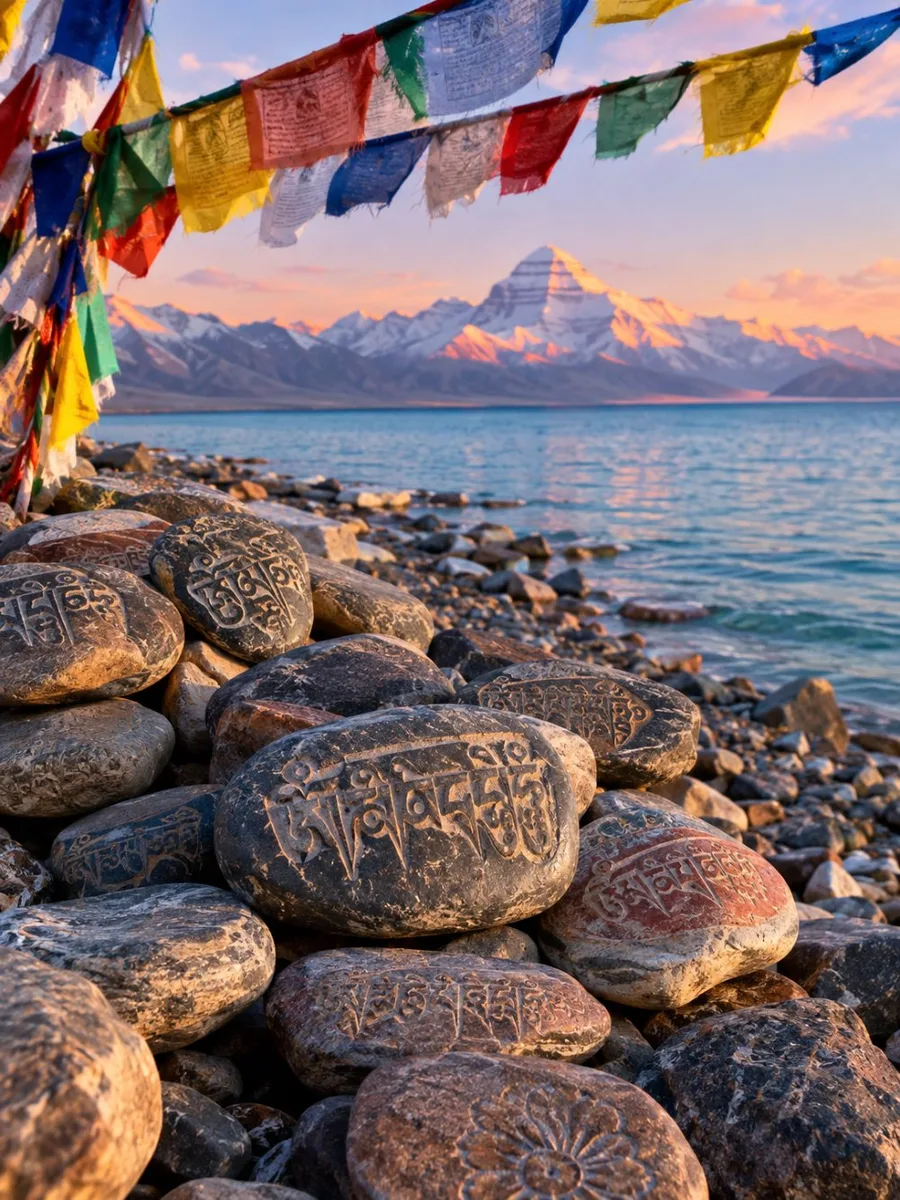
See it for yourself: a night at the lake, Rakshastal and the full kora on the 15-day tour from Lhasa.
Book thisIs it true that NASA found something at Kailash?
No. No NASA study of Kailash appears in any credible publication. The viral claims about pyramids, time running faster and hair growing quicker have no scientific backing.
Even a Tibet travel agency that lists Kailash "secrets" says the hair-and-nails story has no scientific evidence (Tibettourism). The mountain's near-symmetry comes from layered rock eroded by ice, not construction. And some of the most shared "Kailash" clips are not Kailash at all: fact-checkers traced one to Mount Assiniboine in Canada (Factly).
None of this touches what the mountain means to pilgrims. Shiva's home, Mount Meru and the place of Rishabhanatha's liberation are matters of faith, and they stand on their own.
Why don't planes fly over Mount Kailash?
Because almost nothing flies over this part of Tibet. There are no major air routes overhead, and no no-fly zone for Kailash itself has been published.
Remote western Tibet sees little traffic, and China restricts airspace along much of the Himalayan border, which is a different thing from a ban tied to the mountain. Scheduled flights from Lhasa land at Ngari Burang Airport, about 56 km from the lake (Wikipedia). Stories that planes "avoid" Kailash for spiritual or magnetic reasons cite no source.
Has anyone climbed Mount Kailash, and is it banned?
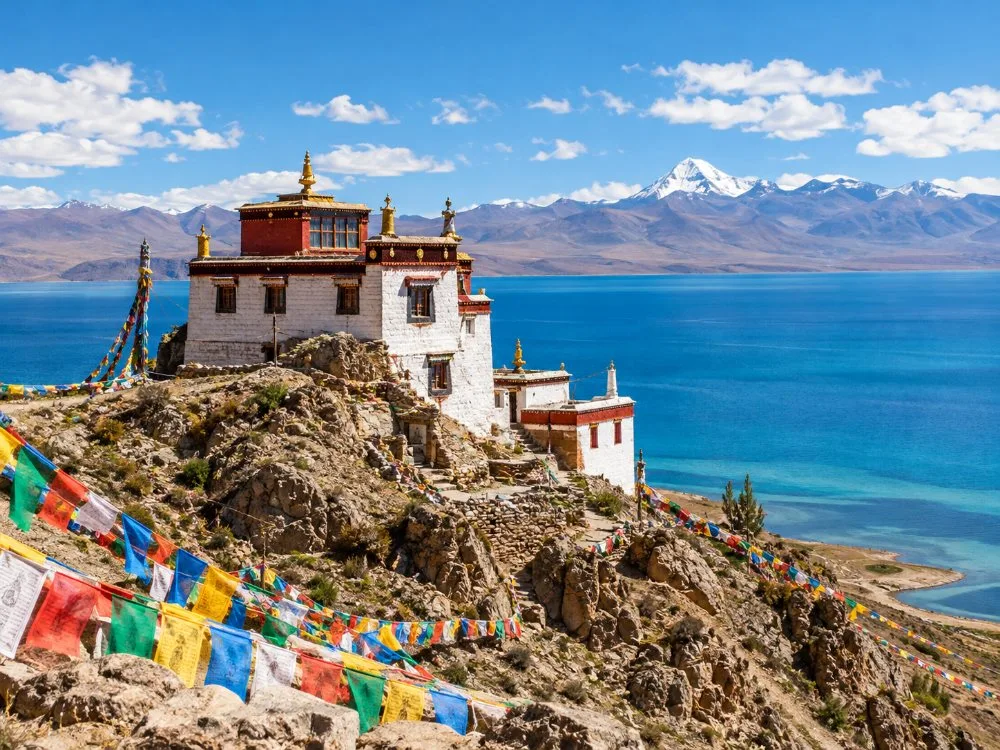
No known ascent. Climbing is forbidden by Chinese authorities, and pilgrims of every faith regard it as sacrilege.
In the mid-1980s China offered Reinhold Messner a chance to climb it; he declined. In 2001 a Spanish team sought permission and was refused amid protests, and the authorities stated that climbing Kailash is strictly forbidden (Wikipedia). There is no climbing permit to apply for. The Buddhist story of Milarepa reaching the summit in a contest with a Bon master is a legend, told with reverence, not a mountaineering record.
People ask about a "punishment". There is no published penalty specific to Kailash, because there is no legal way to try: your permit covers the kora path, and a guide who let a client leave it would risk the agency's licence. Even the inner kora is mostly closed; in 2026 only the first 4.5 km to Selung was open (Tibet Vista).
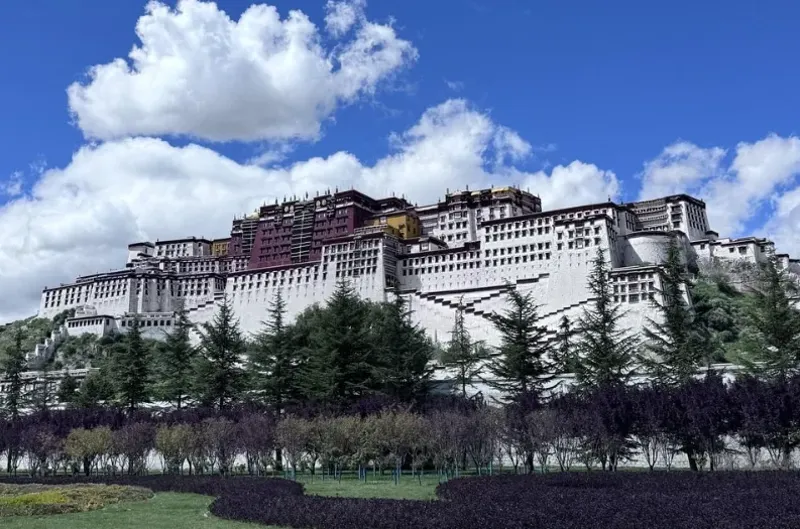
One mountain people climb, one nobody does: see the north face of Everest on a separate 9-day trip from Lhasa.
Book this Tour detailsIs Kailash bigger than Everest?
No. Kailash is 6,638 m. Everest is 8,848.86 m, more than 2,200 m higher. What sets Kailash apart is its shape and its standing, not its height.
Everest's height is the joint China and Nepal figure announced in December 2020 (Kathmandu Post). Some sites give Kailash 6,656 m, but 6,638 m is the figure in standard references. Everest has been climbed thousands of times since 1953. Kailash has never been climbed, and is walked around instead. The two sit on the same road west from Lhasa. The Everest Base Camp tour covers Everest as a trip of its own.
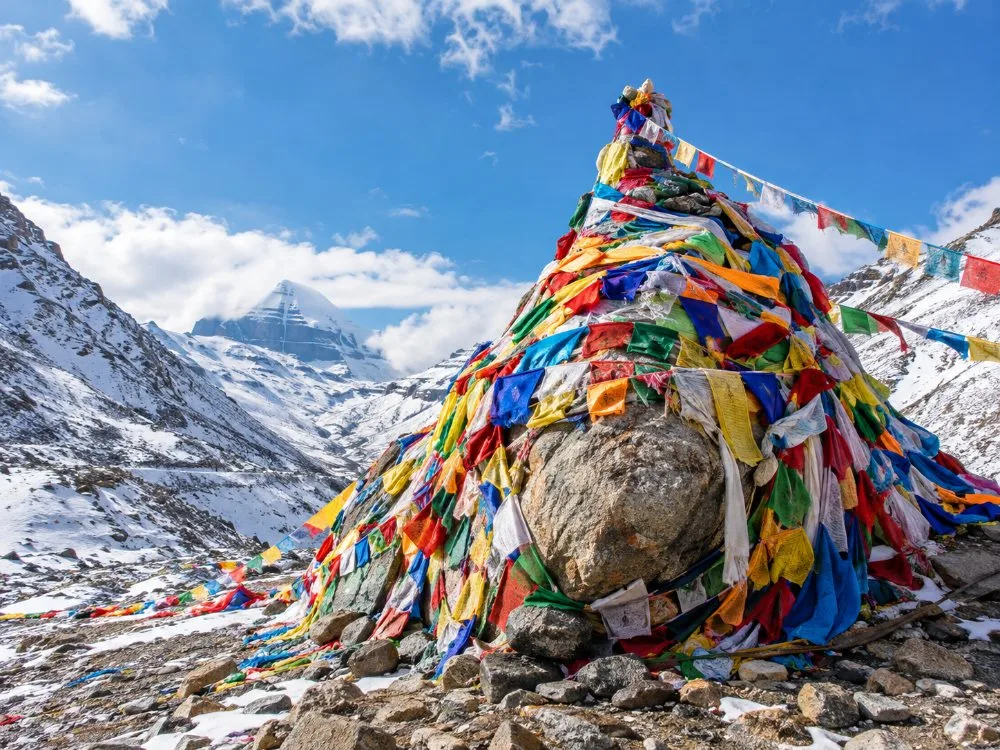
Can you bathe in or drink the water of Lake Manasarovar?
No bathing: it has been banned since 2018. You may collect water for religious use. Filter or boil it before you drink it.
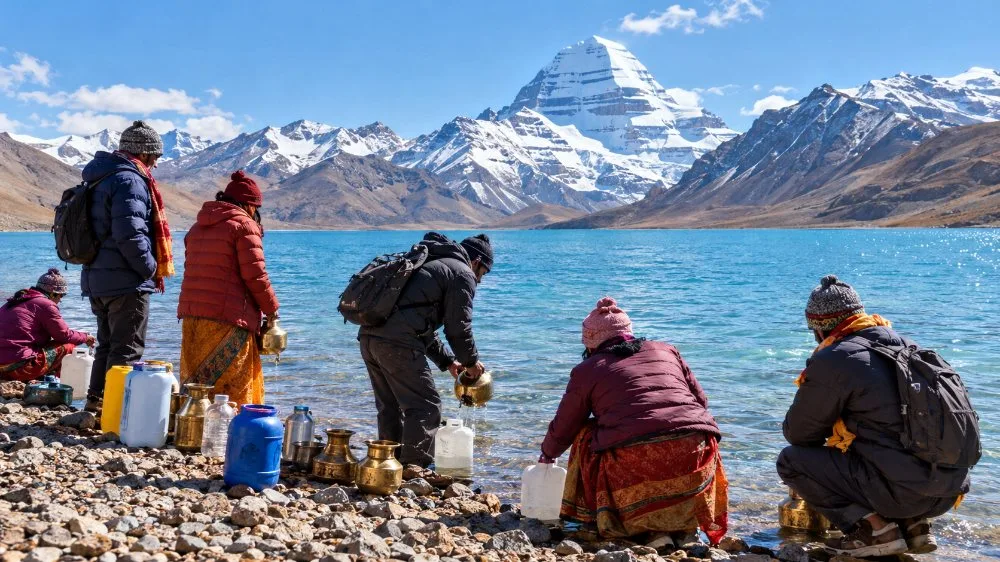
The Hindu tradition of a dip in Manasarovar is old, and many Indian agency sites still promise one. The rule has changed: swimming and bathing are prohibited, and fishing is banned as well (Kathmandu Post; China Highlights). Pilgrims pour water drawn from the lake over themselves at the shore instead, with no soap.
For drinking, treat it like any surface water: filter and boil (Wonders of Tibet). Taking a sealed bottle home for puja is fine. For the pilgrim rules in full, read the yatra guide for Indians.
Stand on the shore yourself: two weeks from Lhasa, with a night at the lake and the kora.
Book thisFrequently asked questions
Who owns Mount Kailash?
China administers it as part of the Tibet Autonomous Region, in Ngari Prefecture. It sits close to the borders with India and Nepal.
Why is Lake Rakshastal salty?
It has no outlet. Water flows in from Manasarovar through the Ganga Chhu and evaporates, leaving the salt behind.
Is Lake Manasarovar the highest lake in the world?
No. It is one of the highest large freshwater lakes. Smaller lakes sit higher, and published heights for Manasarovar range from 4,583 to 4,600 m.
Why is Mount Kailash never climbed?
Because it is forbidden and sacred, not because it is proven impossible. China does not issue climbing permits for it.
Ready to book
Choose your tour
Each operator arranges its own guide and transport; check the listing for permits, dates and cancellation terms.
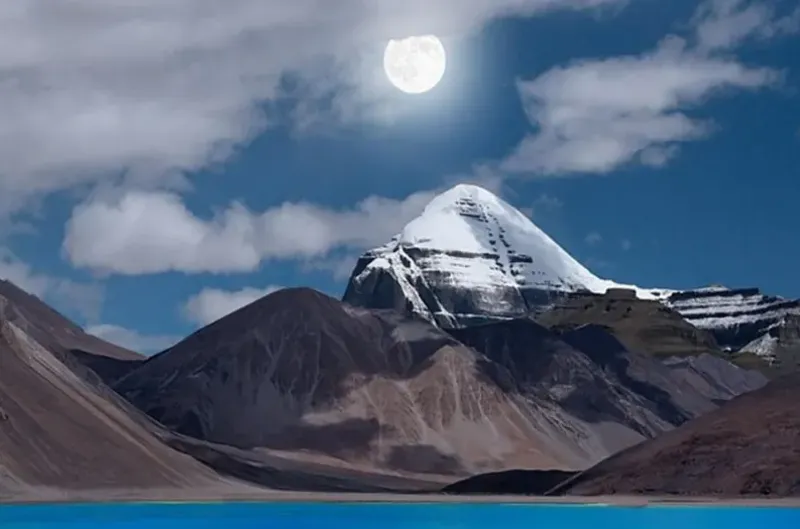
15-Day Kailash & Manasarovar Small Group
- Starts in Lhasa, small group
- Lake Manasarovar on the route
- The Mount Kailash trek (kora)
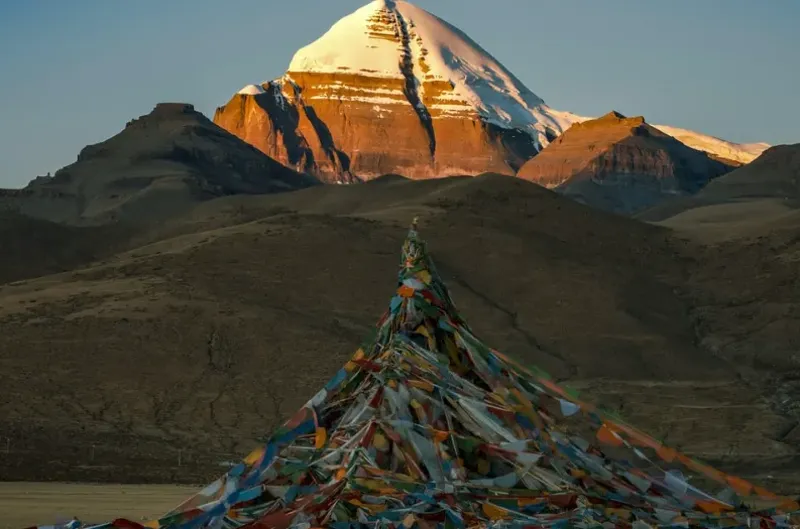
Mount Kailash Pilgrimage from Kathmandu, 11 Days
- Pickup available in Kathmandu
- Lake Manasarovar
- The 3-day Kailash kora over the Dolma La
Kailash Mansarovar Yatra via Lhasa, 11 Days
- Pickup available in Kathmandu
- Route via Lhasa, not the closed Kyirong road
- Lake Manasarovar and Mount Kailash